
How heat pumps work
A heat pump moves thermal energy from one place to another using a refrigeration cycle. In heating mode, it extracts heat from outside air, ground, or water and delivers it inside. In cooling mode, the process reverses. Because heat pumps move heat rather than create it, they deliver 3-4 units of heating energy for every unit of electricity consumed.
Heat pump types
Air source heat pumps (ASHP). Extract heat from outside air. Suitable for most applications, relatively straightforward installation, lower capital cost than ground source. Modern units perform efficiently even at low ambient temperatures.
Ground source heat pumps (GSHP). Extract heat from the ground via buried loops or boreholes. Higher efficiency than air source, particularly in cold weather. Higher installation cost but lower running costs. Suitable where land area is available.
Water source heat pumps. Extract heat from rivers, lakes, or groundwater. Very high efficiency where suitable water sources exist. Requires environmental permits but can deliver excellent performance.
Industrial applications
- Warehouses and logisticslarge volumes, moderate temperature requirements, significant heating loads
- Manufacturingprocess heating and cooling, space conditioning
- Food productionsimultaneous heating and cooling requirements
- Office and commercialefficient heating and cooling for occupied spaces
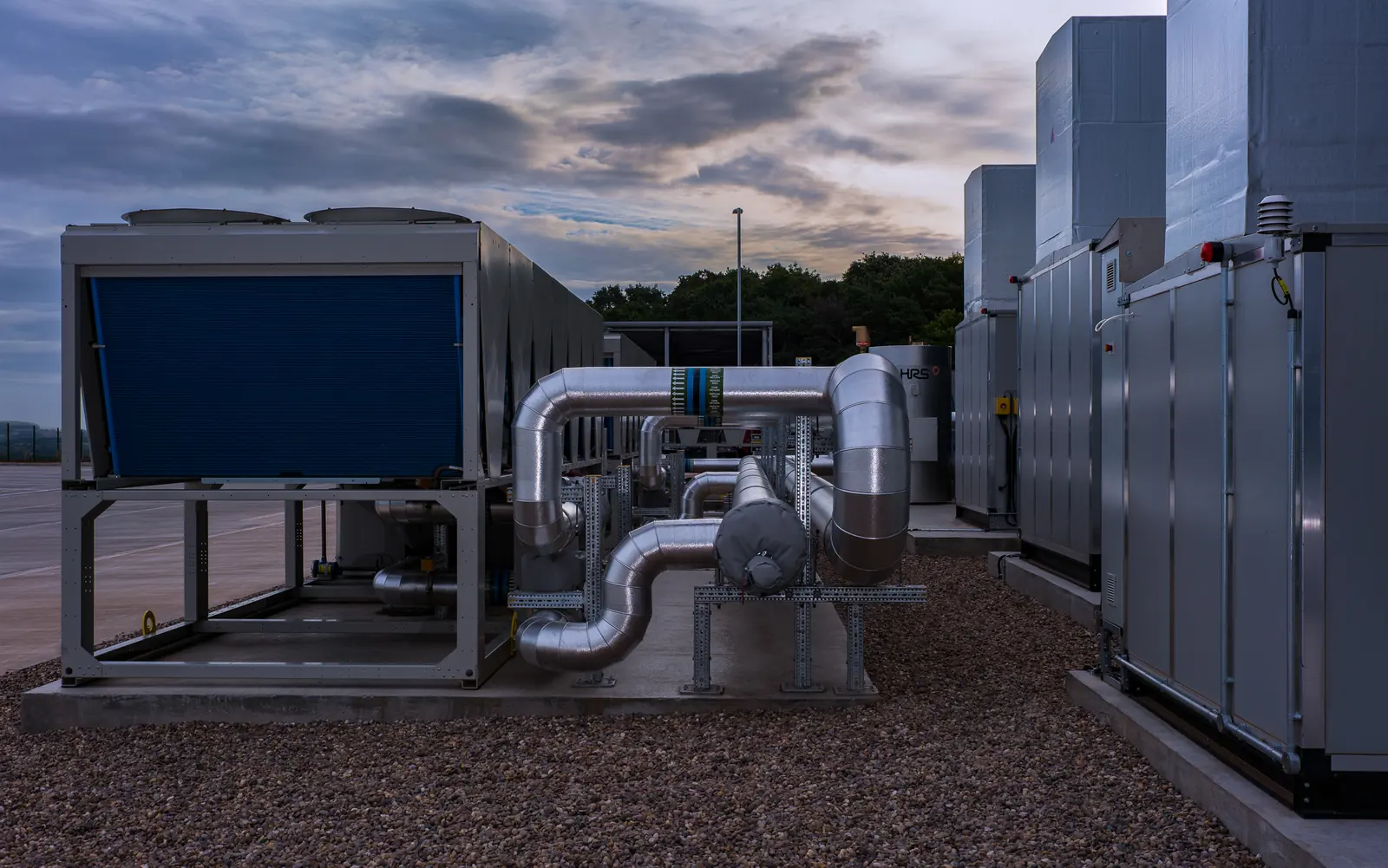
The warehouse case is the one we are asked about most, and it is the hardest: a big volume, a high roof, and a heating load that arrives all at once on the coldest morning of the year. DC9 at Prologis RFI DIRFT is that job done — a bespoke Daikin air-to-water unit delivering 359kW into almost 600,000 m³, gas-free, holding 5°C when it is -5°C outside.
Our heat pump services
- System design and specification
- Installation and commissioning
- Integration with existing heating systems
- Maintenance and support
- Performance monitoring
Our approach
Requirements assessment — heating and cooling loads, building fabric, operational patterns
Technology selection — air source, ground source or water source based on site conditions
System design — integration with existing infrastructure, redundancy planning
Installation and commissioning — performance verification against design parameters
Ongoing maintenance and monitoring — ensuring long-term efficiency and performance
Why Jet Environmental
- 30-50% lower heating costs compared to gas boilers
- Single system provides both heating and cooling
- Significantly lower carbon emissions, heading towards zero as the grid decarbonises
- Reduced equipment, maintenance and plant room space requirements
- Government incentives available for commercial and industrial heat pump installation