
Frost protection is a fire-safety system first
The primary purpose of frost protection is the safe operation of your fire-sprinkler system. Sprinkler pipework carries water, and water freezes — and a frozen sprinkler main is a fire-protection system that cannot do its job when it is called on. Product quality matters too, but the sprinklers are the reason this system is not optional.
Nobody notices frost protection working. Everybody notices it failing.
The 5°C target
The typical design target is simple to state: keep the internal area at or above 5°C. What that demands of the system depends entirely on the building — its size, its fabric, and how much heat is already being generated inside it. The target is a single number; hitting it economically across a large industrial space is the engineering.
The most efficient heat is the heat you already have
Our method circulates the heat created by internal heat gains, distributing it through the space via nozzle air distribution — the same engineering behind our approach to destratification. Because the building's own heat is continuously put back to work in the occupied volume, the system rarely needs to generate heat at all. That is what makes it incredibly efficient: most of the time, the plant is standing by rather than burning.
The boiler you don't fire is the cheapest one you own.
Heat sources — including heat pumps, done honestly
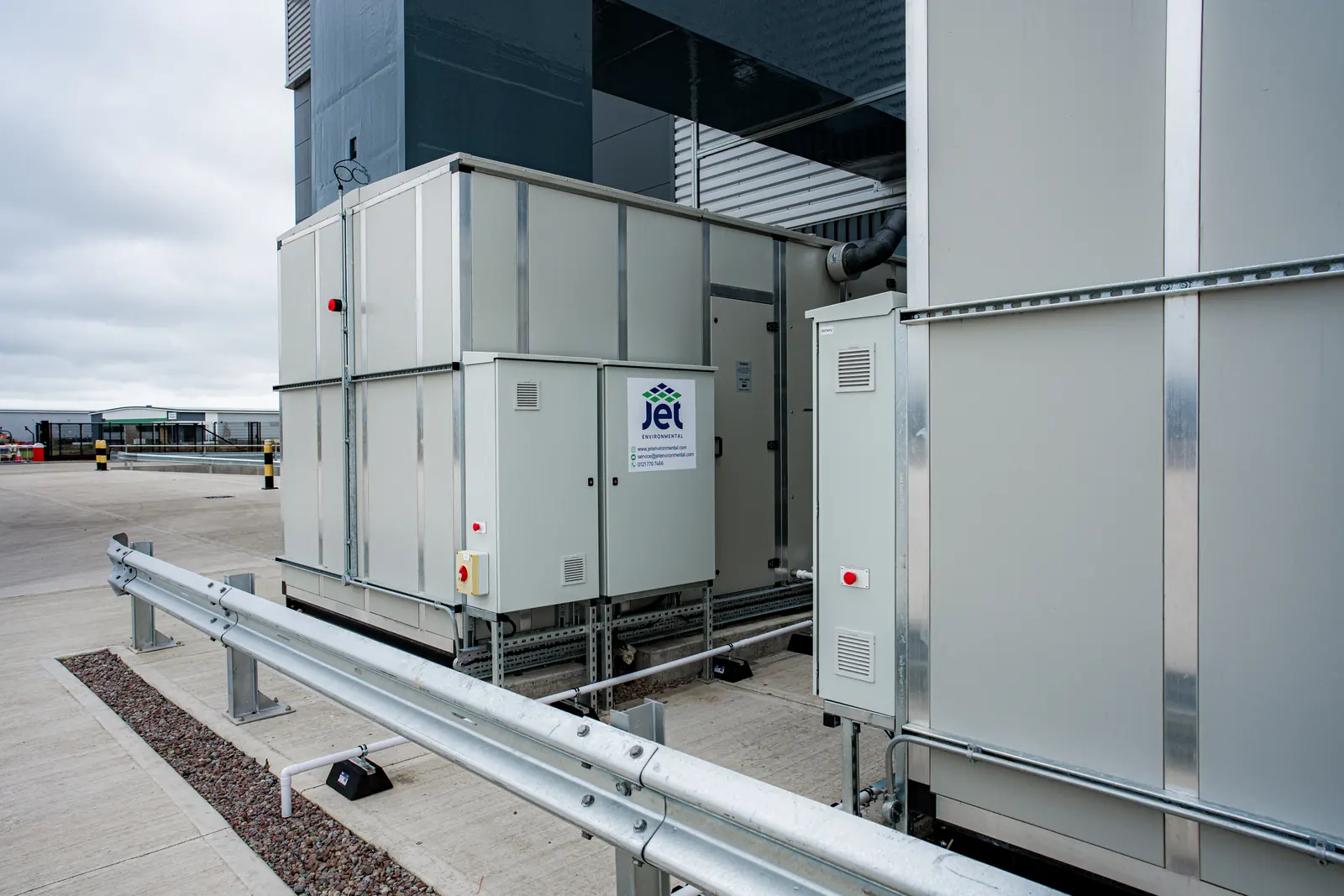
Where heat does need to be generated, we work with gas, DX and low-temperature hot water. Heat pumps are viable too — but a frost-protection start is the worst operating condition a heat pump faces: the building is cold, the outside air is colder, and the full duty arrives all at once. We have worked through those design constraints rather than around them, and installed many dependable heat-pump-based systems throughout the UK and Ireland — including DC9 at Prologis RFI DIRFT, where a bespoke air-source heat pump holds 5°C across 326,792 sq ft with the outside air at -5°C.
The technology choice should follow the design case, not the brochure.
Proven across the coldest duty there is
We have delivered more than 40 frost-protection systems. It is a duty we know well in sprinklered warehouses and distribution centres, where the stock and the sprinkler system both depend on the space never dipping below target. And because the system earns its keep on perhaps a handful of nights a year, planned maintenance and remote monitoring are part of the job — a frost-protection system is only as good as its readiness on the night the temperature drops.
Our approach
Site survey — the building, its fabric, and the internal heat gains already available inside it
Distribution design — nozzle air distribution engineered to circulate the heat the building creates
Heat source selection — gas, DX or low-temperature hot water, or a heat pump with the cold-start constraint designed through honestly
Installation and verification — the system proven against its design duty, not assumed
Ongoing maintenance and monitoring — because a protection system only counts if it works on the night it's needed
Why Jet Environmental
- More than 40 frost-protection systems delivered
- Circulates the heat your building already generates — the plant rarely needs to fire, which is what makes the approach so efficient
- Holds the internal area at or above the typical 5°C target
- Heat source flexibility: gas, DX, low-temperature hot water, or heat pump where the design case supports it
- Dependable systems installed throughout the UK and Ireland