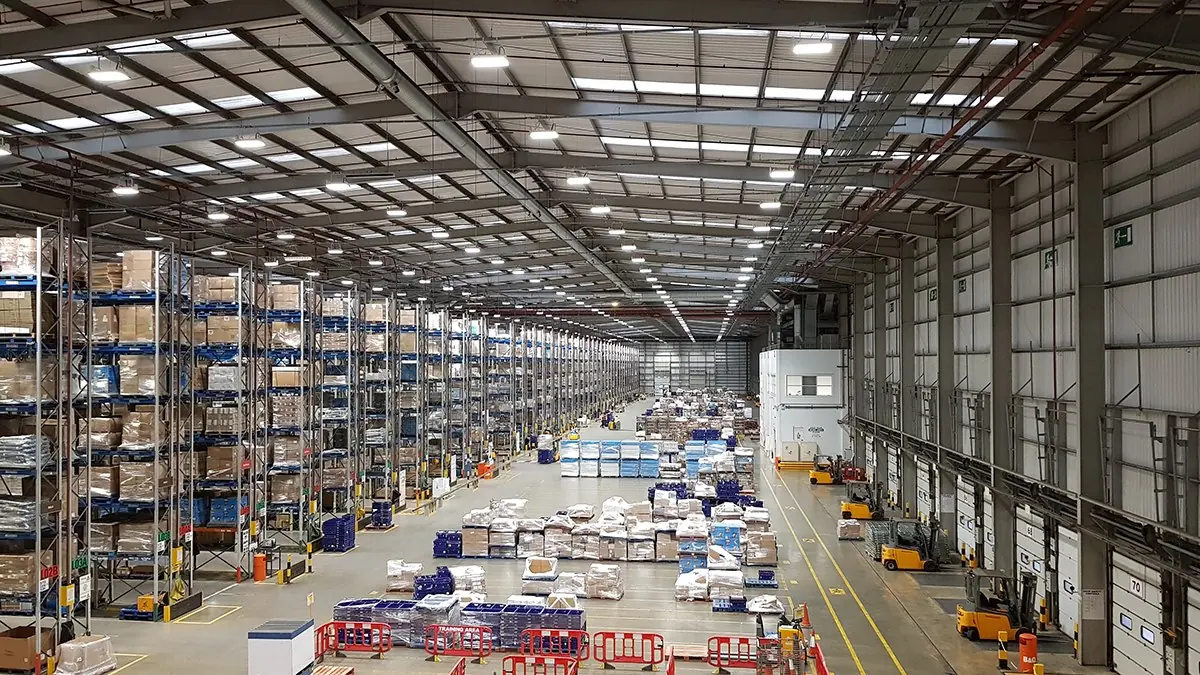
Why fulfilment floors defeat conventional systems
Mezzanines trap the heat where the people are. Warm air rises; pick towers put your densest staffing exactly where it collects. A system designed for an open shed delivers a top deck several degrees warmer than the ground floor — and the complaints follow the thermometer. Destratification is where the fix starts: stop paying to heat air that sits under the roof doing nothing.
The doors never close for long. Continuous trailer movements dump conditioned air all day. The system has to recover the dock zone immediately, without overcooling or overheating the aisles next to it.
The building never stops. There is no maintenance window at 2am in peak season. Whatever conditions the system holds, it has to hold them through the night shift, the seasonal surge and the sale weekend.
How balanced air distribution solves it
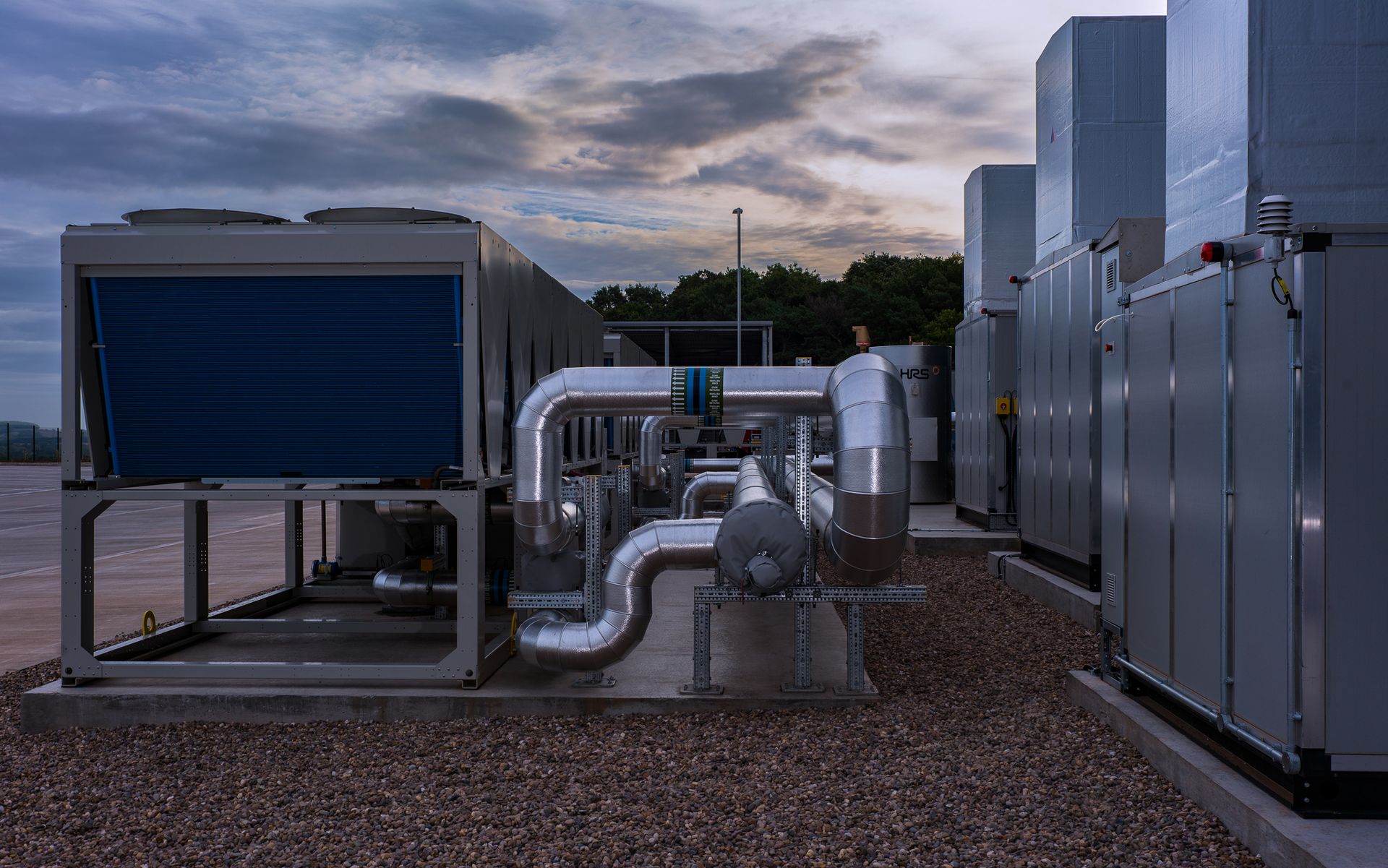
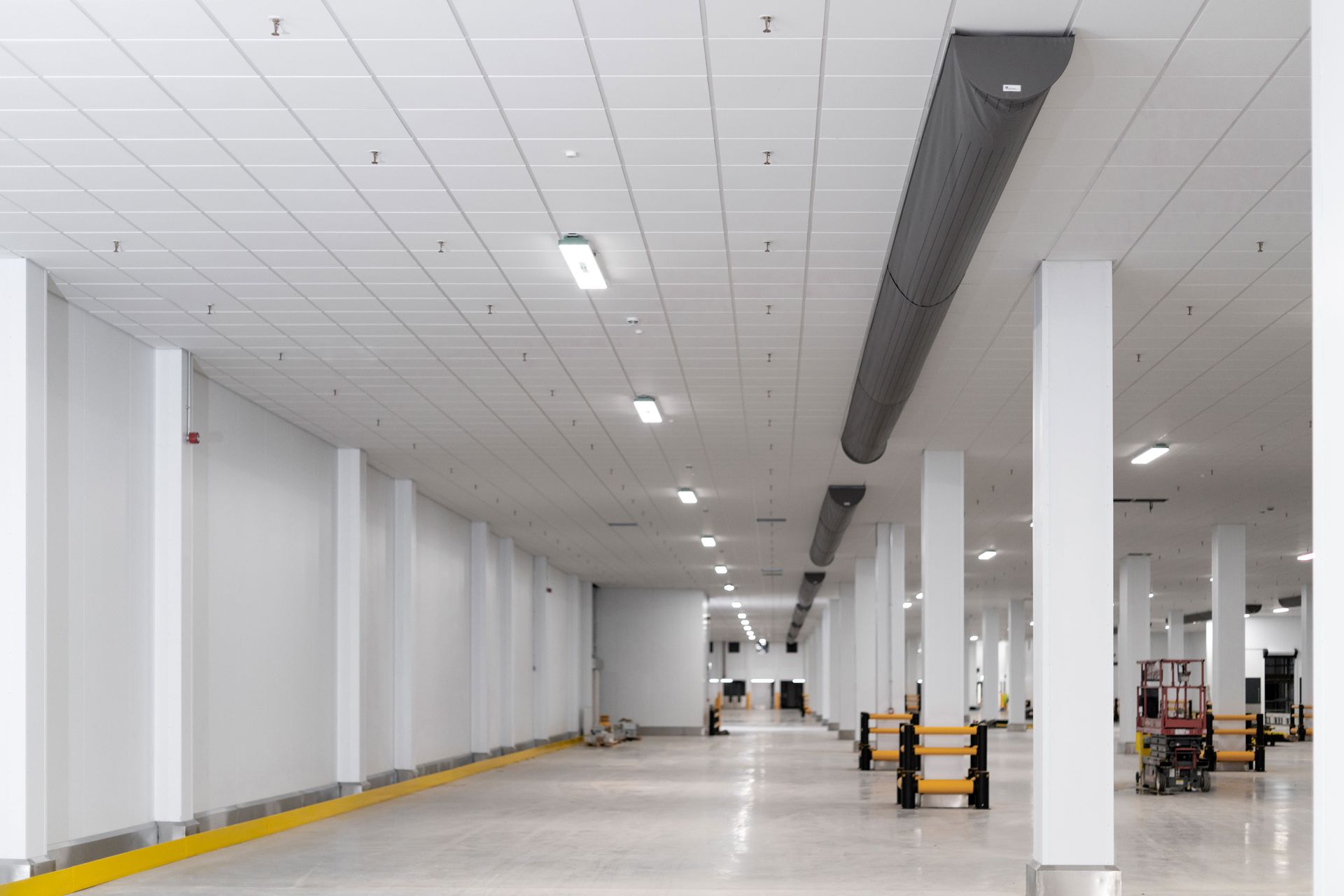
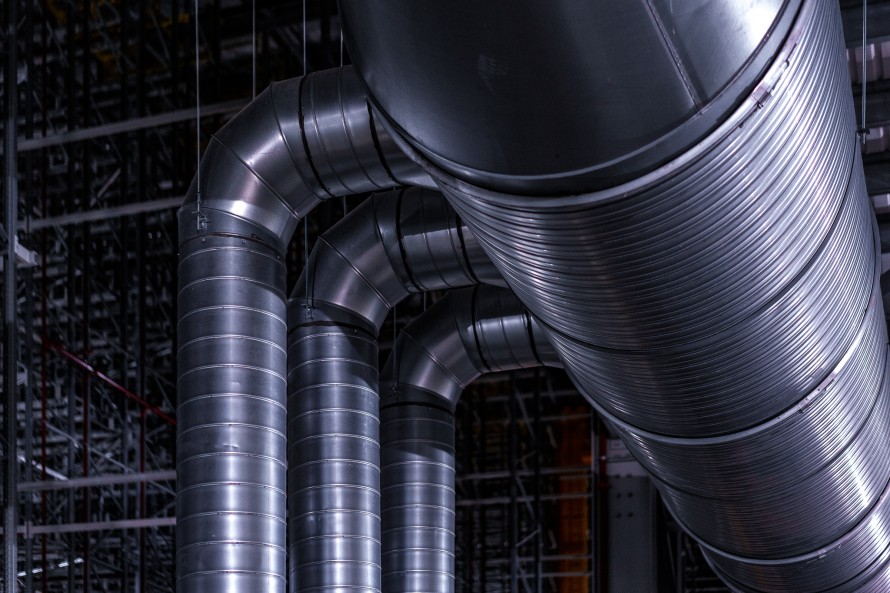
Balanced JET Technology uses computer-calculated nozzle air distribution to condition the complete volume — floor to top mezzanine, wall to wall — holding temperature within ±1.0°C throughout. No hot deck, no cold dock, no de-stratification fans bolted to the roof as an apology.
And because the distribution is designed in rather than adjusted on site, there's nothing at high level to maintain. No shutting down a pick tower to get a platform in. The system is accessible from floor level, which in a 24/7 operation is not a detail — it's the difference between maintenance and downtime.
Systems built this way operate up to 30% more cost-effectively than conventional solutions, because you're conditioning the working zone, not the roof space.
Built on the buildings eCommerce runs in
We've delivered more than 80 warehouse and distribution-centre installations across the UK and Ireland — the same building stock, the same physics, the same round-the-clock pressure. The names on our project list include Amazon and Boohoo: fulfilment operations where the climate system is judged by pick rates and uptime, not by its brochure. The wider story is on our logistics and warehousing page.
Keeping it running at peak
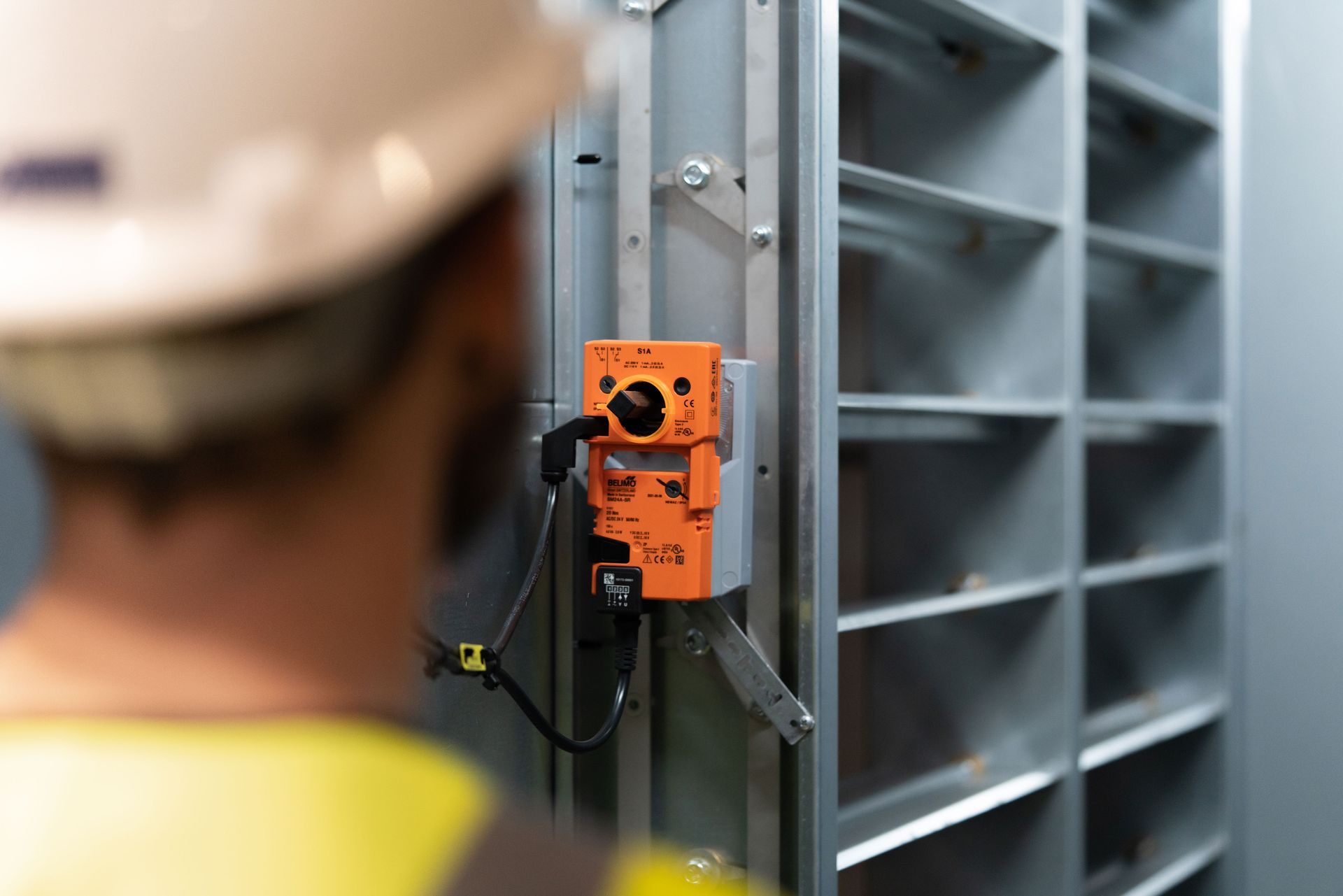
Remote monitoring watches the system in real time, raises alerts as issues develop and lets our engineers diagnose faults before anyone travels. When something does break in week 48, our emergency callout cover exists precisely for buildings that can't wait. Peak is when the system earns its keep — and when ours gets tested.
Talk to an engineer
Tell us about your building — clear height, mezzanine layout, door schedule, shift pattern. We'll tell you what the system actually needs to do. Call 0121 770 7466 or email sales@jetenvironmental.com.